Sourdough Starter Recipe
Craft your own thriving sourdough starter with just flour, water, and patience. A bubbling beginning to homemade breads.
The allure of sourdough lies in its tangy complexity, a symphony of flavors that dance on your tongue with every bite. Imagine the comforting aroma of freshly baked bread wafting through your home, an experience that begins with a simple concoction of flour and water. But what makes it magical is the transformation of these humble ingredients into a living, breathing culture. My first brush with sourdough was when I inherited a jar from a neighbor who used to bake every Sunday. It felt like receiving a secret potion, alive and tinged with stories of its journey through different hands. What makes this sourdough starter recipe truly work is the ease of nurturing it through its phases. The trick is consistent feeding and keeping an eye on those delightful telltale bubbles that signal a healthy, active starter. Starter thrives best when it becomes part of your daily rhythm, and its care is a gentle ritual, a little moment to pause and connect with the primal act of baking. Whether you bake every day or just occasionally, this starter becomes a constant presence in your culinary endeavors.
Step-by-Step
- 01Step 1 / 5
In a large glass or plastic container, combine 1/2 cup all-purpose flour and 1/2 cup whole wheat flour.
Add 1 cup lukewarm water and stir until no dry bits remain.
The mixture will be thick and pasty.
- 02Step 2 / 5
Cover the container loosely with a cloth or plastic wrap, allowing the starter to breathe.
Place it in a warm, draft-free spot in your kitchen.
- 03Step 3 / 5
Every 24 hours for the next 5 days, feed your starter by discarding half and replenishing with 1/4 cup all-purpose flour, 1/4 cup whole wheat flour, and 1/2 cup lukewarm water.
- Advertisement
- 04Step 4 / 5
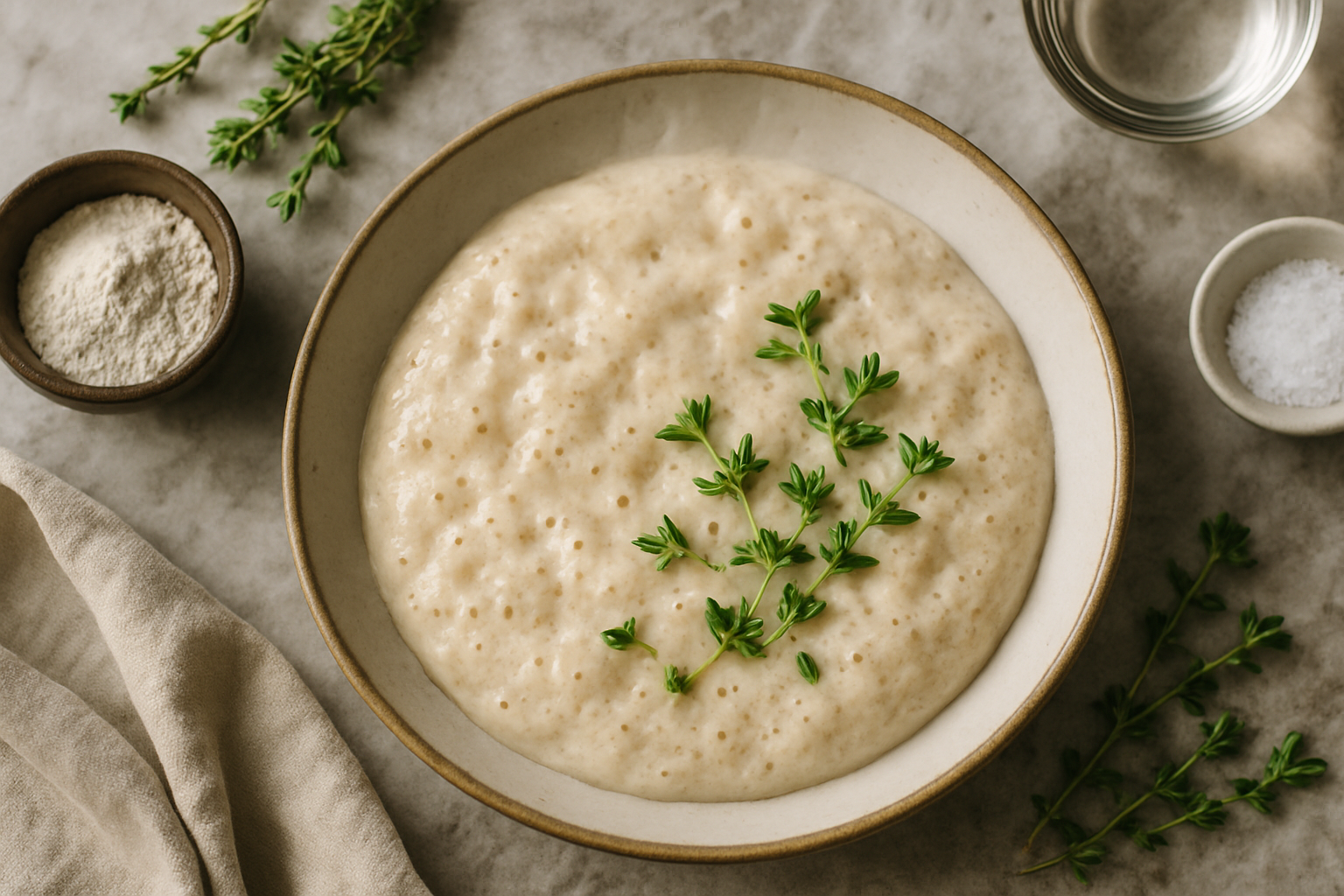
Around day 3, you should notice bubbles and a slightly sour aroma.
This indicates that wild yeast are becoming active.
- 05Step 5 / 5
By day 5 or 6, your starter should be bubbly and doubled in size within several hours of feeding.
It is now ready to use in your sourdough recipes, bringing a robust flavor and perfect rise to your bread.
Chef Tips
- •Use un-chlorinated water to avoid inhibiting yeast growth.
- •Make sure to use a consistent feeding schedule to keep your starter healthy.
- •Temperature affects activity; warmer environments will accelerate fermentation.
- •If your starter develops mold or an unpleasant odor, discard and start over.
- •Label your container with feeding times to help maintain consistency.
Nutrition (per serving)
Estimates only. Actual values depend on brands and portions.
Frequently Asked
Can I make this ahead?+
Yes, once your starter is active, store it in the fridge and feed weekly.
What can I substitute?+
You can use rye flour instead of whole wheat for a stronger flavor.
How do I store leftovers?+
Store your starter in a sealed container in the fridge, feeding weekly.