Japanese Tamagoyaki Recipe
Master the art of making Tamagoyaki, a sweet and savory Japanese rolled omelet perfect for breakfast or a light snack.
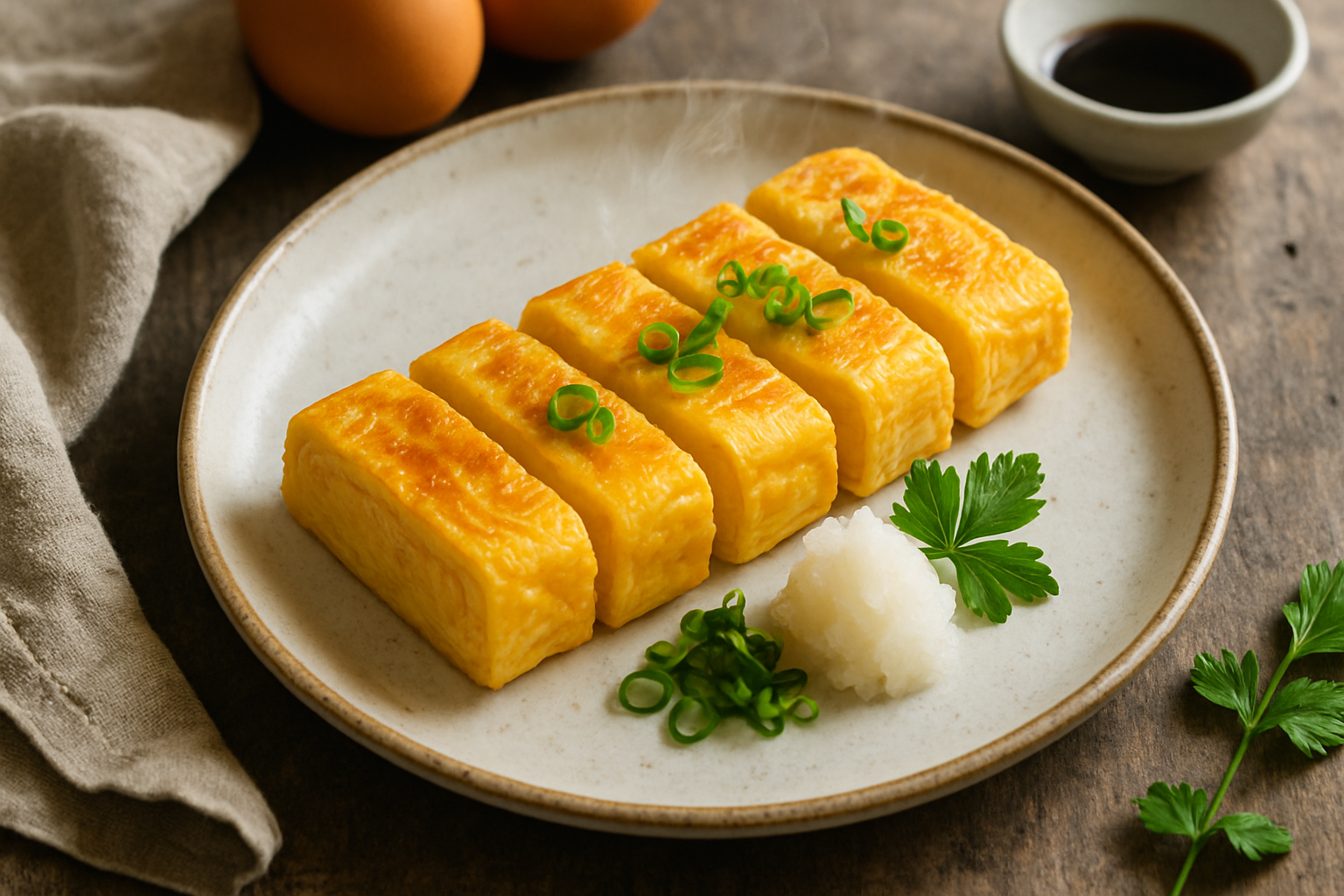
Picture a warm kitchen on a serene morning, the sweet and savory aroma of Tamagoyaki wafting through the air—it's a delicate Japanese omelet with layers so fine they almost resemble the pages of a well-read book. Tamagoyaki is an art form in its own right, requiring patience and a gentle hand, but the payoff is a tender, subtly sweet roll that's perfect for any time of day. It's a dish that greets you with a hint of dashi and a whisper of sugar with each bite.
Tamagoyaki has its roots in Japanese cuisine as a breakfast staple and often finds its way into bento boxes or served as sushi. Growing up, it was a Sunday morning ritual in my household, one I cherish for its simplicity and the quiet rhythm of rolling eggs in the pan. It's a recipe that combines the elegance of tradition with the comfort of home-cooking.
What makes this recipe special? It's all in the technique. Using a rectangular pan is key, but the real trick lies in controlling the heat and being patient with each roll. By cooking the egg slowly and layering it with care, you ensure a perfectly tender Tamagoyaki that holds its shape beautifully without overcooking.
Whether you're enjoying it with a warm bowl of rice or simply as a snack with a cup of green tea, Tamagoyaki brings a touch of Japanese elegance to your table, making even the simplest meal feel like a special occasion.
Step-by-Step
- 01Step 1 / 7
In a mixing bowl, gently beat the eggs with a fork, being careful not to incorporate too much air.
Mix in the dashi, soy sauce, mirin, and sugar until well combined.
- 02Step 2 / 7
Heat a tamagoyaki pan over medium-low heat and lightly grease it with a little vegetable oil, using a paper towel to spread the oil evenly across the surface.
- 03Step 3 / 7
Pour a thin layer of the egg mixture into the pan, just enough to cover the bottom.
Tilt the pan to ensure even coverage.
Let the egg set until the surface is mostly cooked but still slightly wet.
- 04Step 4 / 7
Using a spatula, gently roll the set egg layer towards one end of the pan.
Lightly oil the exposed part of the pan again.
- Advertisement
- 05Step 5 / 7
Pour another thin layer of egg mixture into the pan, lifting the rolled egg to allow some mixture underneath.
Cook until set and gently roll the new layer over the first roll.
- 06Step 6 / 7
Repeat the process, adding more egg mixture, cooking, and rolling until all the egg is used.
Keep the heat low to avoid burning.
- 07Step 7 / 7
Once finished, transfer the tamagoyaki to a cutting board.
Let it cool slightly before slicing into thick, even pieces.
Chef Tips
- •A rectangular tamagoyaki pan will give you the best results, but a small frying pan will do in a pinch.
- •Keep the heat at medium-low to ensure the egg cooks gently without burning.
- •If you don't have dashi stock, water with a pinch of instant dashi granules works too.
- •Use a silicone spatula for easy rolling and to avoid scratching your pan.
- •Be patient with the rolling; practice makes perfect!
Nutrition (per serving)
Estimates only. Actual values depend on brands and portions.
Frequently Asked
Can I make this ahead?+
Yes, Tamagoyaki can be made ahead and stored in the refrigerator for up to two days. Enjoy cold or at room temperature.
What can I substitute?+
If you don't have dashi, you can use chicken or vegetable broth for a different but still tasty flavor.
How do I store leftovers?+
Store any leftover Tamagoyaki in an airtight container in the refrigerator. Consume within two days for best taste.