Bibimbap Recipe
A vibrant Korean rice dish topped with veggies, beef, and a fried egg, all mixed with a spicy-sweet sauce.
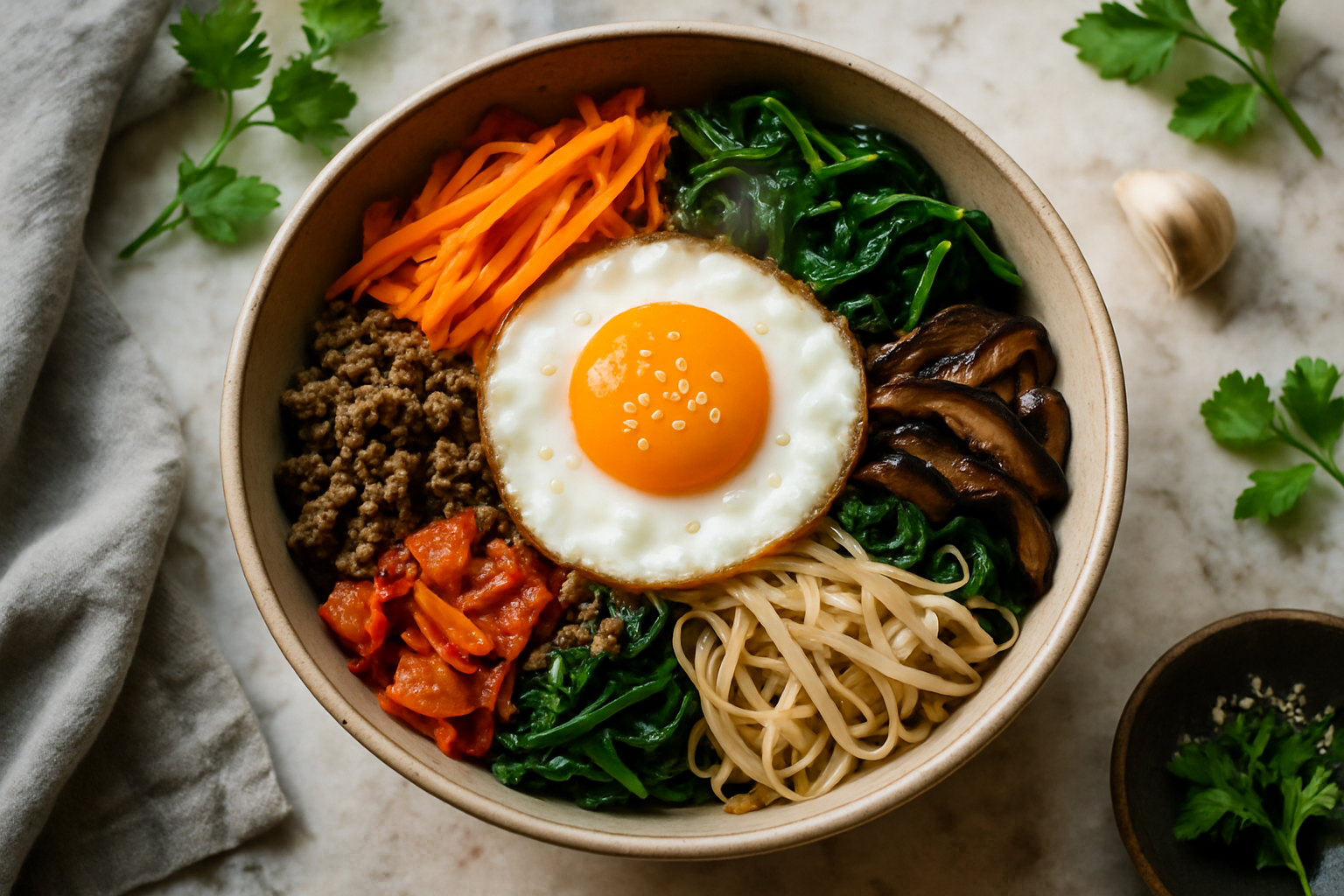
There's something truly magical about breaking into a freshly fried egg, watching its yolk cascade over a medley of crisp vegetables, tender beef, and steamy rice. Bibimbap, a symphony of colors and flavors, offers a mouthwatering balance of textures and tastes that's simply irresistible. This dish is not just a meal—it's an experience, a vibrant mix of comfort and excitement in every bite. Bibimbap has its roots in traditional Korean cuisine, serving as a meal that's as much about the joy of mixing as it is about the ingredients themselves. The name translates to 'mixed rice', and it's a fitting moniker for a dish that invites personalization and creativity. My first encounter with bibimbap was at a lively Korean street market, the air thick with the aroma of sizzling meat and fresh vegetables. What makes this particular recipe shine is the subtle trick of toasting the rice just before serving, giving it a deliciously crispy edge that contrasts beautifully with the soft yolk and tender beef. The homemade gochujang sauce ties everything together, offering just the right hint of heat and sweetness. Perfect for a cozy dinner or a casual weekend lunch, bibimbap brings a touch of warmth and vibrancy to your table, making even the simplest of nights feel special.
Step-by-Step
- 01Step 1 / 6
Rinse the rice under cold water until the water runs clear.
Cook according to the package instructions, then let it sit to steam until fully tender and fluffy.
- 02Step 2 / 6
In a small bowl, combine gochujang, sesame oil, sugar, soy sauce, and rice vinegar.
Stir well to create a smooth sauce and set aside.
- 03Step 3 / 6
Marinate the beef slices in a mixture of soy sauce, sesame oil, and minced garlic for 10 minutes.
Heat a pan over medium-high heat and cook the beef until browned and cooked through, about 4 minutes.
Set aside.
- 04Step 4 / 6
In the same pan, lightly sauté the zucchini, carrot, and spinach separately with a pinch of salt until just tender.
Blanch the bean sprouts in boiling water for 1 minute, then rinse under cold water and drain well.
- Advertisement
- 05Step 5 / 6
Heat a small amount of vegetable oil in a pan over medium heat.
Fry the eggs until the whites are set but the yolks remain runny, about 3 minutes.
- 06Step 6 / 6
To assemble, add a portion of rice to each bowl.
Arrange the beef, vegetables, and bean sprouts around the rice.
Top with a fried egg and a generous spoonful of the sauce.
Just before eating, mix everything together thoroughly.
Chef Tips
- •For extra flavor, toast the rice in a little sesame oil until it gets slightly crispy before serving.
- •Adjust the level of spiciness in the sauce by adding less gochujang if you prefer a milder taste.
- •Feel free to substitute chicken or tofu for the beef for a twist on the classic.
- •Using a stone pot to serve the bibimbap keeps it warm longer and helps the rice develop a delicious crispy layer.
- •Prepare all vegetables in advance to streamline the cooking process and ensure each element is hot and ready to go.
Nutrition (per serving)
Estimates only. Actual values depend on brands and portions.
Frequently Asked
Can I make this ahead?+
You can prepare the ingredients in advance, but it's best to cook the rice and fry the eggs just before serving for optimal texture.
What can I substitute?+
You can substitute the beef with chicken, pork, tofu, or tempeh. For a vegan version, use chickpea flour to mimic the eggs.
How do I store leftovers?+
Store leftovers in separate airtight containers in the fridge for up to 2 days. Reheat the rice and veggies separately for best results.